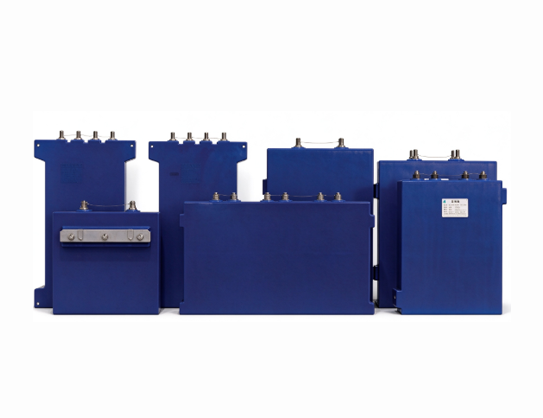
Dry type shell less power electronic capacitors The core applications of dry-type shell less power electronic capacitors are concentrated in high-power scenarios such as high-voltage direct current transmission, new energy generation, industrial frequency conversion, and induction heating. With the characteristics of oil-free, self-healing, low inductance, and high reliability, they are gradually replacing traditional oil immersed capacitors. Industrial motor drive and induction heating: In frequency converters, servo drives, and induction heating equipment (such as induction cookers and industrial heating cores), thin film capacitor modules are used for DC filtering and resonant circuits, replacing multiple discrete capacitors in parallel to solve the problems of uneven overcurrent and inconsistent distributed inductance. Aluminum shell heat dissipation can be used to achieve a fully sealed structure. Traction and Rail Transit: Used for traction inverter systems such as trains and subways, capable of withstanding high currents and surge currents, and meeting reliability requirements under high-frequency and high ripple conditions. New energy and power electronic equipment: used as DC link capacitors in photovoltaic inverters and wind power converters to absorb the peak voltage of IGBT switches and protect power devices; It is also used for AC filtering and reactive power compensation, smoothing voltage fluctuations and filtering out high-frequency noise. Media and Structure: The mainstream technology is metalized polypropylene film, and the shell free design is usually encapsulated with epoxy sealant to eliminate internal air gaps and form a continuous dense insulation layer, which can better withstand high voltage and reduce the risk of breakdown. Core advantages: no oil leakage risk, good fire resistance, strong self-healing performance (local breakdown can self repair), maintenance free, small size and light weight, wide temperature resistance range (-40 ℃ to+85 ℃), equivalent series resistance (ESR) and low self inductance.