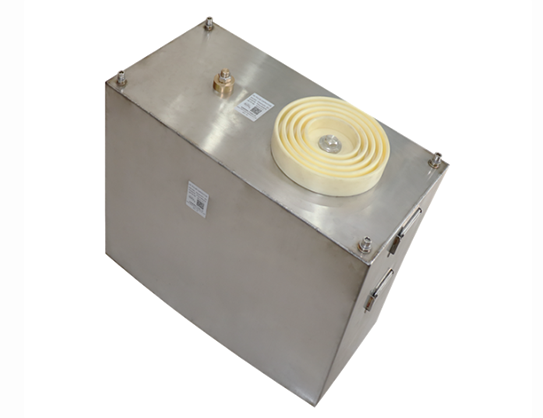
High voltage pulse capacitor The core function of high-voltage pulse capacitors is to quickly store electrical energy and release it instantly, forming high amplitude pulse currents. Normally, charging is done slowly, and when needed, the energy is released in nanoseconds to microseconds to generate high-voltage pulses, strong shock waves, or transient high currents. By utilizing the charging and discharging characteristics of capacitors, electrical energy is stored in the form of an electrostatic field through DC high-voltage charging, and then controlled by switches (such as thyristors and ball gaps) to discharge the load in a very short period of time, forming steep high-voltage pulses. Main application areas: 1. Power and scientific research experiments: used for impulse voltage generators, impulse current generators, and oscillation circuits, it is the basic component for testing the withstand voltage and breaking capacity of lightning arresters, high-voltage switches, and other equipment. 2. Industrial processing and forming: widely used in electromagnetic forming, liquid electric forming, liquid electric crushing, energy storage welding and other scenarios, using instantaneous impact force to process metals or materials. 3. Geological exploration and detection: In cable fault testing and geological exploration, high-voltage pulses generated by capacitor discharge are used to locate fault points or detect geological structures. 4. Medical and research equipment: used as energy storage components for defibrillators, particle accelerators, and laser devices, requiring precise control of discharge energy and time.