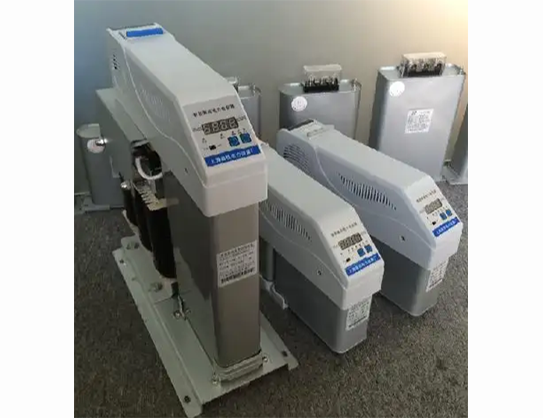
Intelligent compensation capacitor Intelligent compensation capacitors are mainly used for reactive power compensation in low-voltage distribution networks, with the core function of improving power factor, reducing line loss, and enhancing power quality. They also have intelligent functions such as automatic switching, zero crossing switching, and multiple protections. It belongs to the intelligent reactive power compensation equipment of 0.4kV low-voltage distribution network. By monitoring real-time parameters such as grid voltage, current, reactive power, etc., it automatically controls the input and disconnection of capacitor banks and dynamically compensates for the reactive power consumed by inductive loads (such as motors and transformers). Advantages of Intelligence: Compared to traditional capacitor compensation cabinets, intelligent capacitors adopt modular design, integrating intelligent controllers, switching switches, protection devices, capacitors, etc., and have the following characteristics: 1. Zero crossing switching: When the voltage is switched on at zero crossing and the current is cut off at zero crossing, there is no surge impact, and it can be operated frequently to extend the service life of the equipment. 2. Automatic networking: Multiple devices can be automatically networked through RS-485 communication, and a single fault will automatically exit without affecting the overall operation of the system, resulting in higher reliability. 3. Multiple protection: Built in overvoltage, undervoltage, phase loss, overcurrent, overtemperature, short circuit and other protection functions, fault self diagnosis and display of fault type. 4. Flexible expansion: Modular building block structure, compensating for insufficient capacity by directly adding modules. Main application scenarios: Factory power distribution system: With many inductive loads such as motors and transformers, it is the most typical application scenario for intelligent compensation capacitors, which can effectively improve power factor and reduce electricity costs. Commercial buildings and residential communities: used for centralized compensation of loads such as public lighting, elevators, air conditioning, etc., to improve power supply quality. New energy generation: Used to improve power quality and suppress harmonics when photovoltaic, wind power, and other power sources are connected to the grid. Transportation facilities: such as highway lighting, tunnel power distribution, electric vehicle charging stations, balance load fluctuations, and prevent impact on the power grid. Medical field: Ensure the safe and stable operation of medical equipment, and avoid voltage fluctuations affecting equipment accuracy.